
What Every Stand-Up Comedy Night Has in Common With a Great Party
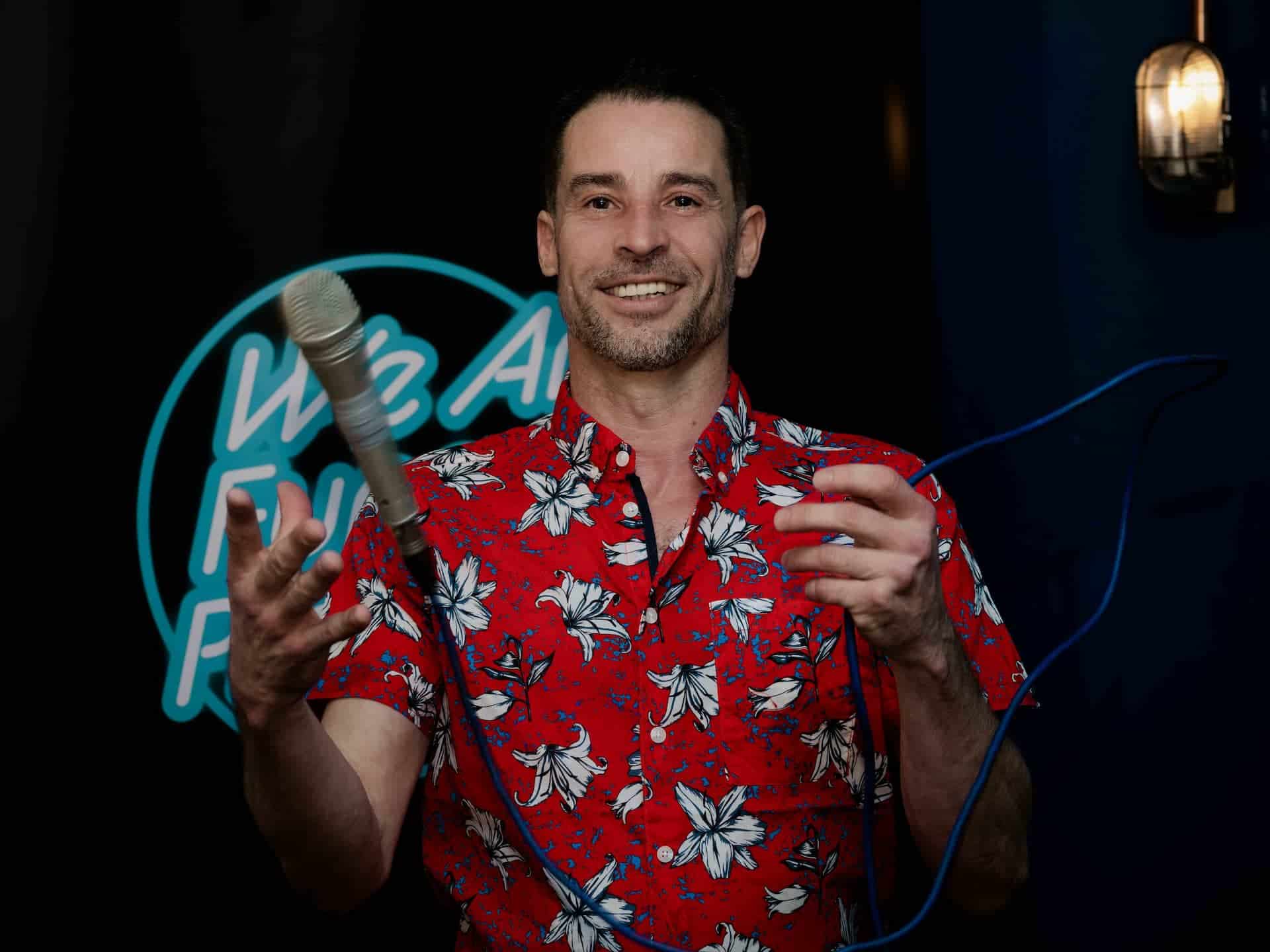
There is rather a lot that goes into booking, promoting and MCing a stand-up comedy show. As a result, matters of production and success can get a little overwhelming at times.
Many years ago, I adopted an attitude, a touchstone for myself if you will, that served me very well across years of running shows. It also served thousands of open mic comedians, hundreds of professional acts, and quite possibly thousands of audience members too.
The moment I felt I was becoming untethered from the mission, frustrated, or starting to miss the point, I would remind myself: every show is like a party. Every show is a party. This always got me back to the primary directive. Make the shows fun.
If the shows stop being fun then everything else falls down.
As the person throwing the party, I was the host. In the world of stand-up, also known as the MC. The gloriously titled Master of Ceremonies. And the work to fight for the right to party began long before the entry music kicked in and the stage lights came up.
There are all kinds of parties and thus, some of my similes may falter. A dinner party is pretty much focused on food, drink and conversation between a very limited number of people. A house party may well have music and dancing as a focal feature. A birthday party specifically celebrates an individual while gathering lots of people in the aim of sharing a good time. Dinner, house or birthday party, it is always about sharing a good time.
My shows aimed to be precisely that. A good time shared. For acts and audiences alike.
For every open mic I ran, the aim was a pleasing and well-located venue at which to host the party. Food and drink available. Music carefully considered so as to generate an appropriate mood. Most clearly, entertainment laid on. That would be the stand-up comedy. And there would be conversation. That is the crowd work.
There might also be a celebration of an individual. For example, when the room applauds a first-time act for their courage to simply get up and perform. Or when the audience needs no leading in whooping and celebrating a performer who just crushed. I have even been known to lead a chorus of Happy Birthday from the entire crowd for an individual audience member. Sometimes when it was indeed their actual birthday.
The invitation process is somewhat different to a dinner, house or birthday party, where the invitees are hand-picked, personally known and socially close to the host. For a stand-up comedy night there is an alternative two-tier invitation system in place. The acts. Then the audience. In exactly that order.
A headliner is directly invited to perform and serve as the peak of the show. Then word goes out that acts can apply for a spot on that show, on that date. The aim is always to balance the bill so a broad selection of people feature and a diverse level of experience is represented. It is not simply family and friends.
Having partly undermined my own premise of a gig being a party with an explanation of the invitation process, allow me to get the metaphor back on track.
One of the most valuable things I found when running shows was treating everyone who walked through the door as a guest. This attitude, whatever you may call it, really does meet the party standards test. Most people running open mic nights are comedians themselves. I was somewhat different. Not a comedian and with no ambitions to be one. My background was in television and documentary production. I fell into doing this, loved it, and over the years added other opportunities on top of running the live events.
By taking the guest approach, each person coming to the gig is perceived in the best possible terms. It is on the host to make sure the event and opportunity is as described, and to be as welcoming as can be. It does not matter if your back is hurting or you have had a crumby day. Once it comes time to meet and greet the guests, they receive a warm welcome.
For audience members, that hospitality begins with being directed to the best seats and reassured that it is not the kind of show where acts pick on the audience. It really kicks in when the MC takes the stage and makes damned sure that everyone feels safe and included from the first laugh. That is hosting 101.
Dealing with lots of people drawn to performing stand-up comedy means handling a vast range of characters. Most share a love of stand-up. It is what drew them to open mic in the first place. There is often a lot of pleasant common ground. Comedians are generally pretty bright and that lends itself to some wonderful conversations in and around the gig.
However, the art form can also draw some stunningly self-infatuated egos, needy or brittle folk.
The party attitude proves extremely helpful in identifying where the line of acceptable behaviour sits. There are two types of guest to consider. The acts and the audience.
There are differing standards for each. For acts, just as with any party, a host would not be entirely thrilled with a guest who arrived so late they missed a key part of the event. Or who RSVPed and then simply did not show. The welcome is considerably less warm for an act who has wangled their invitation under false pretences, such as misrepresenting their level of experience, or promising to bring ten people and then rocking up solo.
Audiences will come and go as they please. Some arrive early. Some arrive exactly at the moment the show begins. Some wander in late and possibly wander out soon after. This is all quite normal and acceptable. All the same, audience guests do have standards expected of them.
There is no free pass to being rude to other guests. Shouting out, heckling, disturbing the show are poor behaviour, especially when the host, me, has made it clear it is not welcome.
Like any party host, the responsibility is to manage those people for the best interests of the group. You would not reasonably go to a dinner party and decline to eat because you just had a McDonald's on the way. Nor would you, in good faith, go to a house party and turn off the music that masses of people are dancing to, only to start playing your tame and undanceable new emo band demo.
Equally, it would be a terse response from fellow guests to anyone attending a birthday party who started noshing on the cake prior to the traditional sing-song and candle-extinguishing ceremonies.
If someone is behaving badly at a party, any party, then the host reserves the right to exclude them. For an act that might mean not allowing them to take their promised place on the bill. For an audience member it could be asking them to leave.
An open mic is free to enter. People can be freely asked to exit.
Thankfully, these are rare instances and the vast majority of guests get it. They have come to share a good time, and share a good time they do.
The good will pledge is simple. Something for something. A stage. Or a show. Acts and audiences come as guests and are treated accordingly. In return, everyone can anticipate being treated in that precise, friendly fashion. Then everyone can focus on the good times.
If you are serious about developing your stand-up comedy, the free ebook, The Eight Most Powerful Ways to Turbocharge Your Stand-Up Comedy, is a good place to start. It costs nothing and you can get it right here.
Your Questions About Stand-Up Comedy Nights, Answered
What does an MC actually do at a stand-up comedy show?
The MC, or Master of Ceremonies, is the host of the entire event. They warm up the audience, introduce the acts, manage the running order, handle any disruptions and keep the energy of the room positive throughout. A good MC makes everyone feel welcome before a single comedian has taken the stage.
How do comedy promoters decide which acts to book?
Most promoters look for a balance of experience levels, styles and stage personas to give the audience variety. It is less about favouritism and more about building a bill that works as a whole, much like a good host thinks carefully about who to invite to a party.
What should a first-time comedy audience member expect?
A good stand-up comedy night is designed to make the audience feel safe, included and ready to laugh. A skilled MC will reassure the room early on, and the best shows feel less like a performance and more like a shared experience between everyone present.
What is the difference between open mic comedy and professional stand-up?
Open mic comedy is where comedians develop their craft, test new material and build their stage time. Professional stand-up is where that investment eventually pays off. Most successful comedians spent years on the open mic circuit before reaching headline status.
You might also find these articles to be useful
Online classes for comedians at every level of experience
For business teams
For stand-up comedians
Stand-up skill set. Stand-out results
We teach the craft of stand-up because it is the most demanding communication training in the world.
No script to hide behind. No slide to point at.
Just you, a room and the immediate, honest feedback of a live audience.
That is what we teach. In different rooms, for different reasons, to different people.
We Are Funny Project Limited, 61 Bridge Street, Kington, HR5 3DJ, is registered in England and Wales, company number 08537398.
Copyright © We Are Funny Project Limited. All rights reserved.