FOR CREATIVE, STRATEGY, PLANNING AND TRANSFORMATION TEAMS

Developing Stronger Ideas

Turn rough thoughts into compelling material

A practical workshop for teams who need better ways to find, develop, sharpen and strengthen ideas of any kind


Especially relevant for: Creative Directors, Planning Directors, Strategy Directors, Heads of Innovation, transformation leads and anyone responsible for developing stronger ideas before they reach the room

Why Work with Alfie Noakes

Alfie Noakes founded We Are Funny Project after more than 25 years across BBC journalism, television production and live comedy.

As a journalist and documentary director, he spent over a decade learning how to find the angle that makes a story worth telling, how to develop a half-formed idea into something compelling and how to cut away everything that weakens it.

In comedy, he spent 15 years watching comedians build material from scratch. Finding the premise. Testing the angle. Pushing it further, cutting what did not work and redrafting with more precision and purpose.

Alfie closely observed that process across thousands of stand-up sets, from watching first timers developing over years, to some of the sharpest creative minds on the British comedy circuit.


The discipline of finding stronger ideas, developing them under pressure and editing them down to what actually works is not a creative gift. It is a learnable process.

That is what this workshop teaches.

Why this workshop matters for your team

Good ideas do not always develop themselves

Teams often have the start of something promising: a useful observation, a possible angle, a half-formed thought, a strong hunch. What they do not always have is a reliable way to take it further.

Ideas stall.
They stay vague.
They become too obvious, too wordy or too weak to present with conviction.


AI can generate options quickly.
What it cannot do is identify which idea has genuine potential, push a promising thought in an unexpected direction, or develop the kind of human insight that makes an idea feel fresh rather than familiar.

This matters as much for transformation teams working through a backlog of strategic priorities as it does for creative teams responding to a brief. The problem is the same: good thinking stalls without a reliable process to develop it.


That judgment, and that development process, is a human skill. And it is one that can be taught.


This workshop helps people move beyond first thoughts and build better material with more structure, clearer thinking and greater impact.

• Find stronger ideas more reliably

• Develop raw thoughts more effectively

• Sharpen ideas before they go flat

• Edit with more precision and purpose

• Build material that feels clearer, richer and more compelling

Why this approach makes sense

The overlap has little to do with jokes.

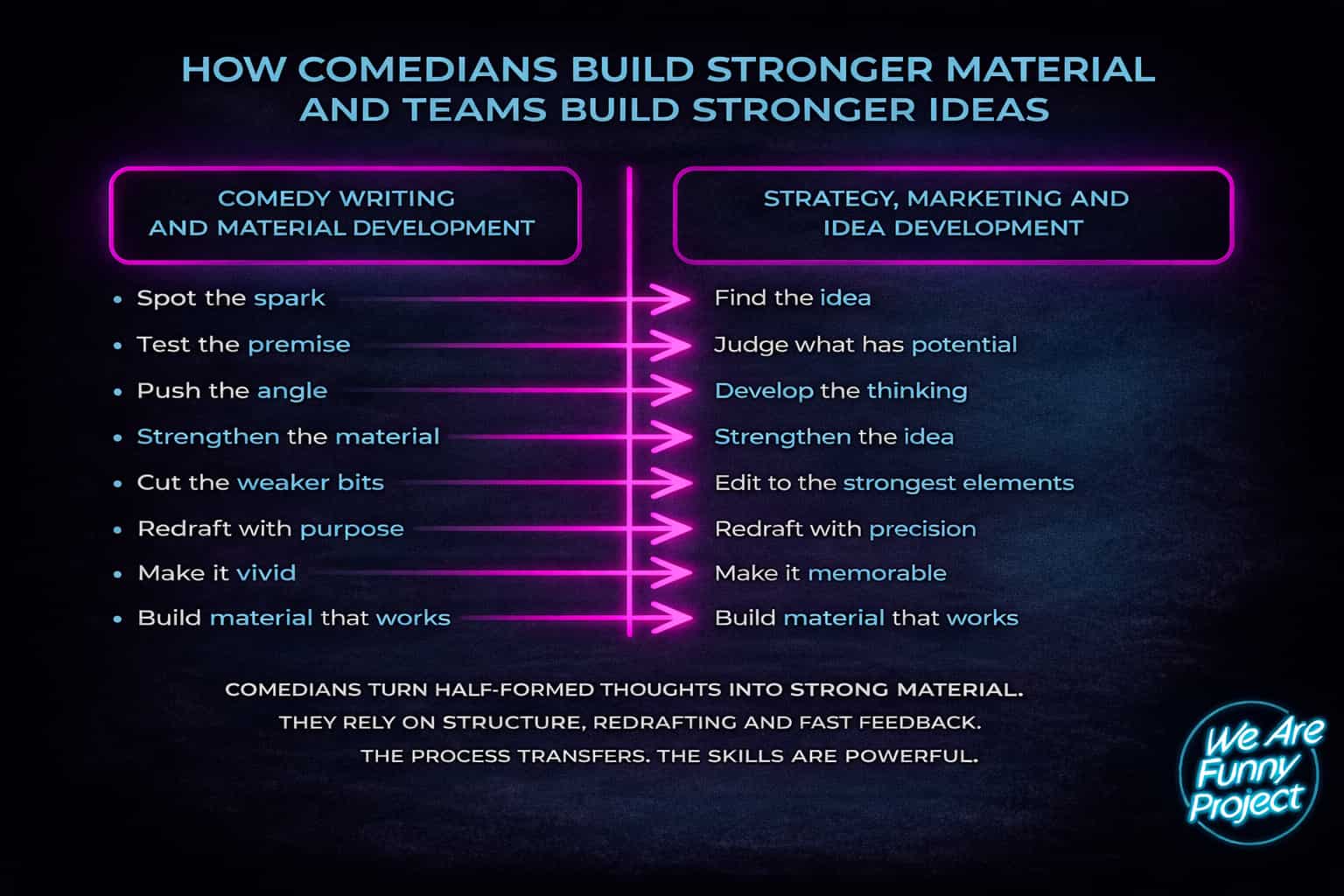
It is about how comedians build material: finding the spark, testing the premise, pushing the angle, cutting weaker parts and redrafting with purpose.

A comedian does not wait for inspiration. They develop a system for generating ideas, judging which ones have real potential, pushing them further and cutting ruthlessly when something is not working.

That process transfers directly to any team whose job depends on producing sharper thinking, stronger angles and more compelling material.
The same disciplines that produce great comedy material produce great ideas in any context.

What your team will learn

Practical skills with immediate value

This workshop gives people a more repeatable way to take rough thoughts, weak ideas or half-formed material and turn them into something more usable.

The aim is not random inspiration. It is a superior development process.

How to spot more useful ideas

Notice promising thoughts earlier and stop overlooking the material worth developing. The best ideas often arrive quietly.

How to judge what has real potential

Get better at identifying which ideas are likely to connect, carry weight or reward further development, and which ones to set aside with confidence.

How to develop ideas more confidently

Use practical frameworks to push ideas further rather than getting stuck at the earliest draft stage, circling the same thought without making progress.

How to edit with more discipline

Cut weaker material more efficiently and strengthen what is actually doing the work. Good editing is not a finishing touch. It is part of the development process.

How to redraft with greater efficiency

Rebuild ideas into a clearer, sharper and more persuasive form. The second version is almost always better than the first. The third better still.

How to tackle future briefs with less guesswork

Leave with a repeatable framework you can return to across a wide range of briefs, challenges and creative situations.

What the session covers

The outline below reflects a strong baseline version of the half-day workshop.

The emphasis can shift depending on your team, your goals and the kind of work the ideas need to support.

In the full-day version there is more time for live development, stress-testing, feedback and direct work on real material.

Finding the premise

How to notice useful observations, passing thoughts and promising themes before they disappear.

The premise is the start of everything. Finding them reliably is a potent skill.

Choosing the right ideas to pursue

Develop a sharper instinct for which ideas have life, pull and room to grow.

Then embrace the confidence to move on cleanly from the ones that do not.

Developing the material

How to push an idea further using structures, contrasts, angles and different routes into the same thought.

First ideas are the seed. Rarely are they the final version.

Sharpening and editing

How to strip an idea down to its strongest parts and cut what weakens the effect. 

Less is almost always more.

Redrafting and strengthening

How to rebuild the material into something more vivid, precise and persuasive.

The final version should feel satisfying, not merely assembled.
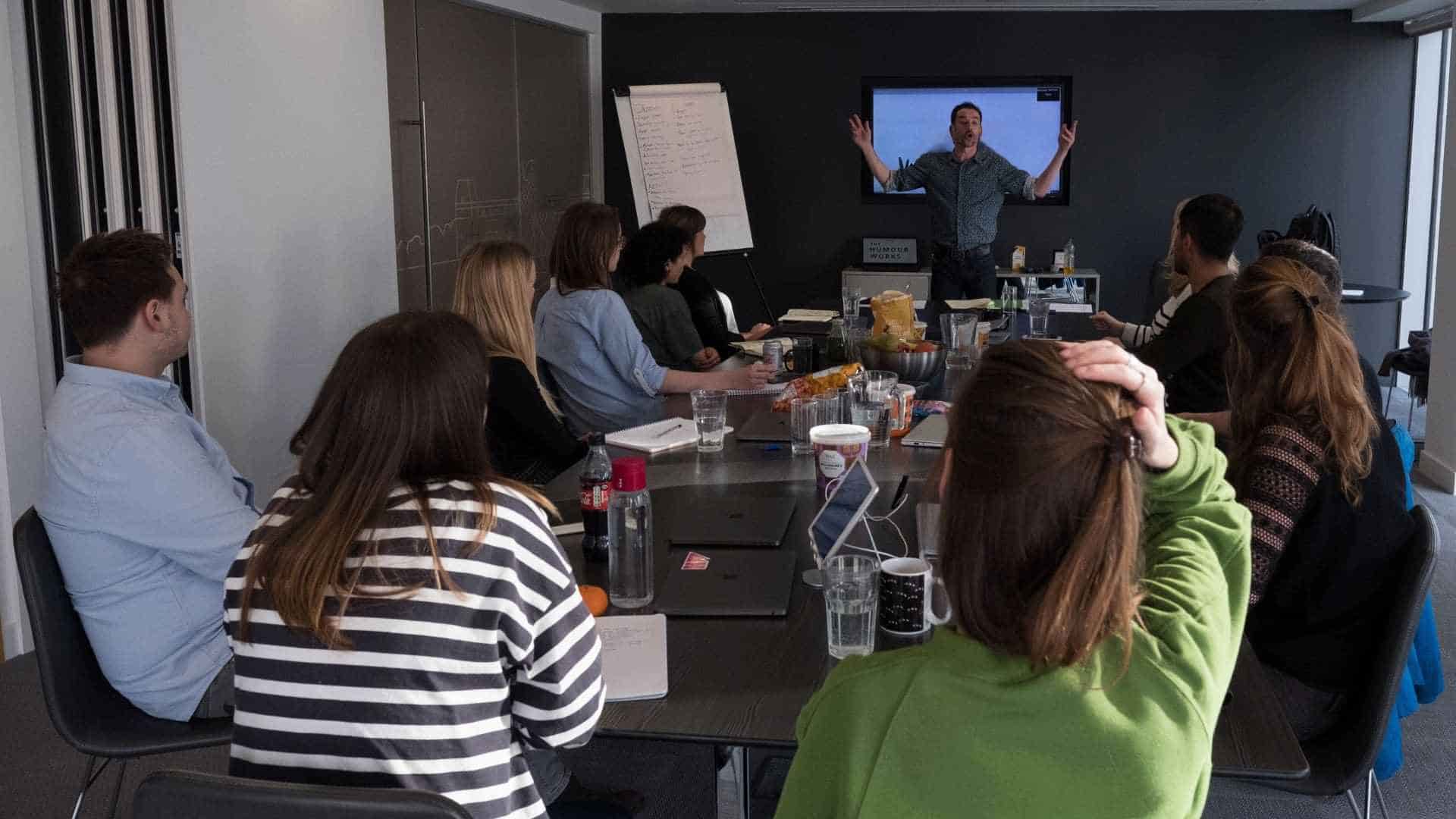
Take the workshop into a live comedy venue
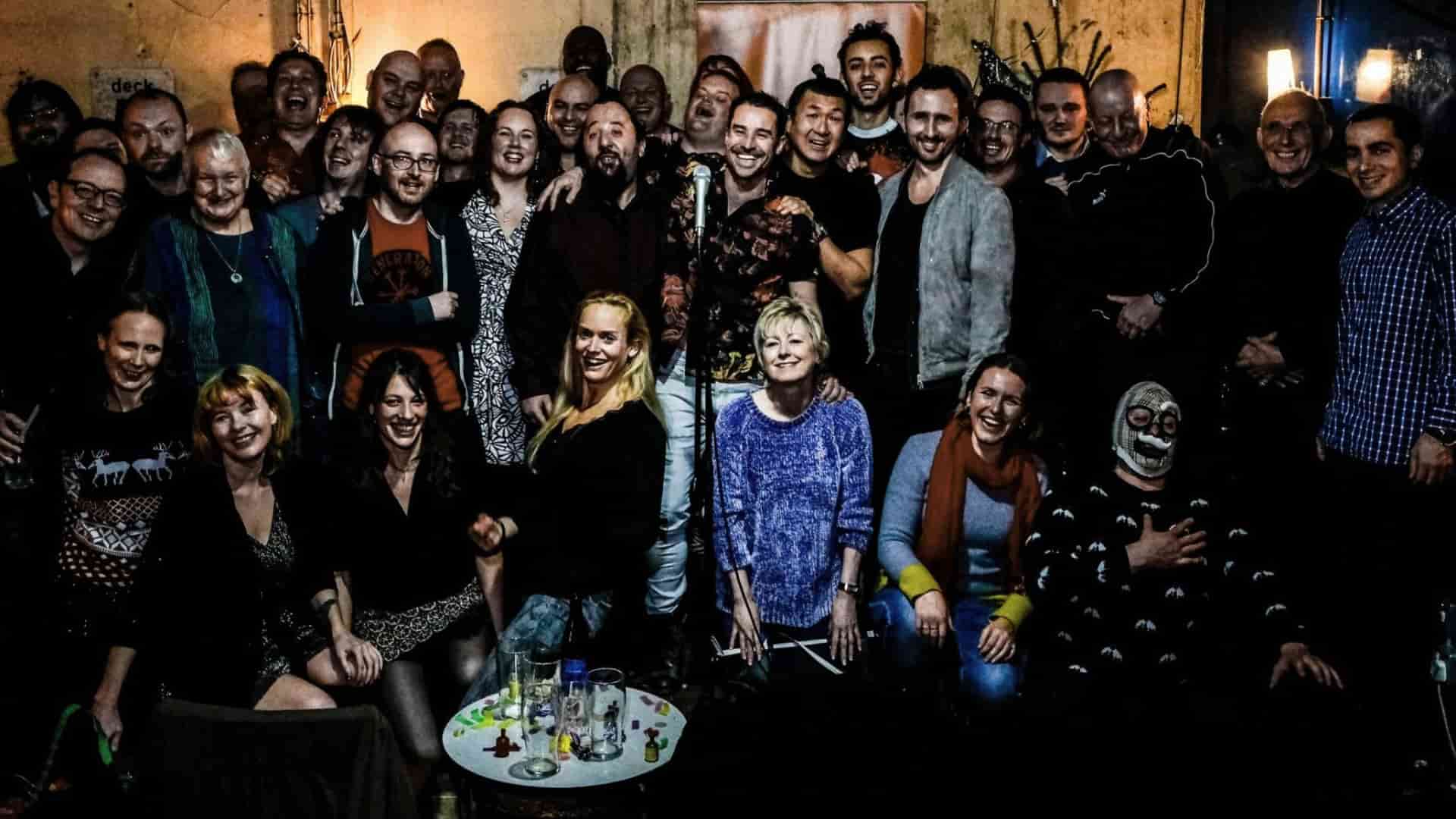
Choose a workshop in a working comedy venue, a private bespoke comedy show, or combine both into a day that develops your team and ends with something genuinely worth talking about.

Professional photographers can capture the whole occasion if you would like individual portraits, group and team shots taken.

Away day workshop

A full workshop delivered on a real stage in a working comedy venue. All the practical value of the core workshops, in a setting that makes the day feel genuinely different

Private comedy show

A one-off company event featuring professional comedians and bespoke material written around your people, your industry and your culture. The tone is agreed with you in advance

Combined experience

Workshop by day, unique stand-up show by night. Skills, shared laughter and one memory that will outlast any standard away day

Pricing and formats

Prices reflect a strong baseline version of the workshop.
Tailored content, travel outside London or additional coaching may affect the final fee.

All options include a pre-session conversation to shape the day around your team.

Relevant for Creative Directors, Planning Directors, Strategy Directors, Heads of Innovation, transformation leads and anyone responsible for developing stronger ideas before they reach the room.

Half-day on-site
From £1,800

A focused, practical session delivered at your premises

Duration: 3 hours

Ideal group size: 8 to 10 people

Best for: a focused session on finding stronger angles, sharpening ideas and learning how to develop creative thinking under time pressure

Style: interactive and practical with idea generation exercises, development frameworks and live material work

Result: people leave with a clearer process for developing ideas, stronger instincts for what works and practical tools to use in the next brief

Full-day on-site
Typically £3,000 to £3,500

More depth, more live practice and stronger behaviour change

Duration: 6.5 to 7 hours including breaks

Ideal group size: 8 to 10 people

Best for: teams who want deeper work on the full ideas process from initial concept through development, refinement and confident delivery

Style: more room for extended idea generation, individual feedback, team development sessions and applied creative work

Result: a team with a shared language for ideas, stronger collective output and more confidence taking creative risks

Away-day in a live comedy venue
From £4,250

The full workshop delivered on a real stage in a working London comedy venue

Duration: full day


Ideal group size: 8 to 10 people


Best for: teams who want the full DSI experience in a setting that loosens creative thinking from the moment they arrive


Style: same interactive format as the full-day, delivered on a real stage in an environment that is genuinely conducive to lateral thinking and creative risk


Result:
 everything the full-day delivers, in a venue that makes bold ideas feel more natural and enhances creative confidence 


The away-day workshop is designed for your core team of 8 to 10. If you'd like to make more of the occasion, the evening is an opportunity to bring in a wider company audience for a private bespoke comedy show. Thirty, fifty or more people.

A natural extension of the day that turns a team workshop into a company event. Show pricing is by quote. Ask on the discovery call.


Not sure which format is right for your team?

Start with a 25-minute discovery call.

No hard sell. Just a focused conversation about your goals, your team size and which option makes the most sense.

Why this workshop works

Practical frameworks, not vague mutterings about creativity

Good idea development is not magic. It is a process.

This workshop gives teams practical ways to spot stronger thoughts, judge which ones are worth pursuing, develop them more effectively and reshape them when they are not yet working.

The frameworks come from disciplines where material has to be shaped quickly and tested hard, under the fastest and most unforgiving feedback loops available.

They help people stop circling the problem and start improving it.

What people say about working with Alfie

Across workshops, gigs, one-to-one coaching and online courses, Alfie's work has attracted nearly 1,000 reviews with an average rating of 4.9 out of 5. No other communication trainer in this space has built that volume of verified feedback from real participants.
Alfie is excellent at ideation and message design. He helps teams generate better ideas, select the best ones, and communicate them with narrative, evidence, and a memorable takeaway. As an event MC or moderator he is outstanding.
TIM,
CEO, SMART-TRAINING-AI
Alfie gave direct, no-nonsense advice that pushed me to think differently and gave me clear direction. Well worth the money.
BABETTA,
EDITOR, NATIONAL MAGAZINE
(TITLE Withheld to Protect the Prestigious)
Alfie provided clear frameworks for idea formation, core principles and editing. I left ready to put it into practice.
David,
LAWYER, COUNTRYWIDE

Explore more workshops

Developing Stronger Ideas is one route into the work.

If your team needs something different, or something that complements this workshop, these may be a better fit.

Bomb Proof: Sales Resilience Under Pressure

For teams who need to handle rejection better, recover faster and stay steadier when difficult conversations are part of the job. Built for roles where the pressure is constant and the ability to reset quickly matters most.

Best for: outbound sales teams, repeated objections and rejection-heavy roles.

Confident Client Engagement

For teams who need to present more confidently, hold the room more effectively and communicate with greater authority in high-stakes moments. The skills that separate people who hold a room from those who merely occupy it.

Best for: pitches, presentations, stakeholder conversations and client-facing delivery.

The
Levity Works

For teams who want warmer communication, stronger team culture and a more connected way of working. The kind of change that makes a difference every day, not just on away days.


Best for: morale, trust, everyday communication, stronger team dynamics and a more human way of working together

Ready to find out if Developing Stronger Ideas is right for your team

Start with a 25-minute discovery call. No hard sell.

Just a focused conversation to work out whether this is the right kind of help and, if so, exactly what that looks like for your team.

Frequently asked questions

Do you offer ongoing coaching or longer programmes?

For teams who want more than a one-off session options include 1:1 coaching, repeat sessions and broader programmes shaped around ongoing communication and performance goals.

Best discussed on a discovery call.

What kind of ideas does the workshop apply to?

Pretty much any kind.


The workshop is designed to help people develop ideas of any kind, whether that means campaign angles, propositions, content ideas, product thinking, stories, presentations or something else entirely.


The mechanics are transferable. That is the point.

What are the payment terms?

Our standard terms are 50 percent on booking and the balance within 14 days of delivery.

For larger organisations with established payment processes, we are happy to discuss terms that work for both sides. Just raise it on the discovery call.

Is this just a brainstorming workshop?

No.


This is not a beanbag-and-Post-it-note session where people are told to think outside the box and then left to fend for themselves.


It is a practical workshop on how to find ideas, judge which ones are stronger, develop them more effectively, sharpen them properly and redraft them with more purpose.

Can the workshop be tailored to our team or our material?

Yes.


The page outlines a strong baseline version of the workshop, but the emphasis can shift depending on your team, your briefs and the kind of idea-development challenges you face most often.


For full-day versions in particular, there is more room to work with real material and stress-test it live.

What group size works best?

Workshops are typically designed for around 8 to 10 people to allow for real depth, practice and feedback.

Smaller groups allow for even more individual attention. Larger groups can still be accommodated, but the delivery may need to be adjusted to suit the format and goals.

Do you travel?

Yes.

Workshops are usually delivered in person, and travel can absolutely be discussed. 1:1 coaching is more appropriate for video conferencing.

For bookings outside London, additional travel costs may apply, and for longer-distance work, accommodation may also need to be covered.

All of that can be discussed clearly at discovery stage, before anything is confirmed.

Who is this workshop best suited to?

Developing Stronger Ideas is best suited to teams whose job involves shaping, developing and refining ideas rather than simply having them.

That most naturally includes strategy teams, marketers and creative teams, but it can also work well for founders, leadership teams and anyone responsible for turning rough thoughts into something stronger and more compelling.

It is also well suited to transformation teams and businesses working through consolidation or restructuring, where the ability to prioritise, develop and communicate ideas clearly has real commercial value.

Infrequently asked questions

If laughter were a currency and its value were determined by scarcity, in which decade of the twentieth century would it have been worth the most?

The 1940s. Specifically 1941 to 1945.

The economic logic of scarcity-determined value means laughter would be worth most precisely where and when it was hardest to come by. Cross-referencing recorded instances of mass civilian suffering, prolonged uncertainty and documented psychological strain with what we know about humour's role in wartime culture produces a clear answer.

And yet the historical record contains something unexpected. Wartime Britain produced more comedy, more actively consumed by more people, than almost any comparable period in its history. ITMA — It's That Man Again — regularly attracted 16 million listeners, roughly a third of the entire population, at its peak in 1944. Music hall survived the Blitz. The Windmill Theatre in London famously never closed. People laughed specifically because things were terrible, and the laughter was worth something real because of it.

The value of a single genuine laugh in the winter of 1943, shared between two people in a shelter during an air raid, was incalculable by any conventional measure.

Which is, of course, exactly what scarcity-based currency theory would predict.

If a ninja and a hippopotamus had a fight, who would win?

The answer largely depends on location and available weaponry.

Should the face-off be with the ninja in a brick tower, heavily stocked with throwing stars, attacking a ground-level hippo from an elevated position... then the ninja walks away with another, fatter, notch on his belt.

However, should an unarmed ninja be trapped in the middle of a paddling pool, and the hippopotamus has a belt full of throwing stars, possibly some nunchuks... Well, notch one up for the 'river horse'.

I think you can agree, the word 'depends' is doing a lot of heavy lifting for this one.

What is the name for the dot above a lowercase i or j?

A tittle.

This is its actual name, has been since the 11th century, and is one of the more enjoyable things to say out loud in a professional context.

The word comes from the Latin titulus, meaning a stroke or accent mark. The same root gives us the word title, which means that the smallest possible mark in written English and the grandest possible designation a person can hold share the same origin.

Which fictional animal would make the worst flatmate and why?

Winnie the Pooh. And it would not be close.

The case against Pooh is extensive and largely structural. He has no concept of boundaries, personal or spatial. He visits without warning at times he describes as "just around lunchtime" with a frequency that suggests he has no other social engagements. He will eat everything in the house, including things he brought himself, and express mild surprise that they are gone. He once got stuck in a door for a week and required communal management of the situation.

His emotional needs are significant and presented as modest, which is the most demanding combination available in a flatmate. He will sit in your kitchen looking thoughtful until you ask what is wrong, at which point he will say "nothing really" in a way that clearly means something.

He has no income.
He pays no rent.
His contribution to shared bills has never been documented.

The honey situation would require its own conversation and that conversation would never fully resolve.

Honourable mentions go to Eeyore, whose presence would be emotionally sustainable but atmospherically grim, and the Tasmanian Devil, who would at least be straightforward about his intentions.

Pooh is the worst flatmate precisely because he is so easy to like and so impossible to actually live with.
Created with